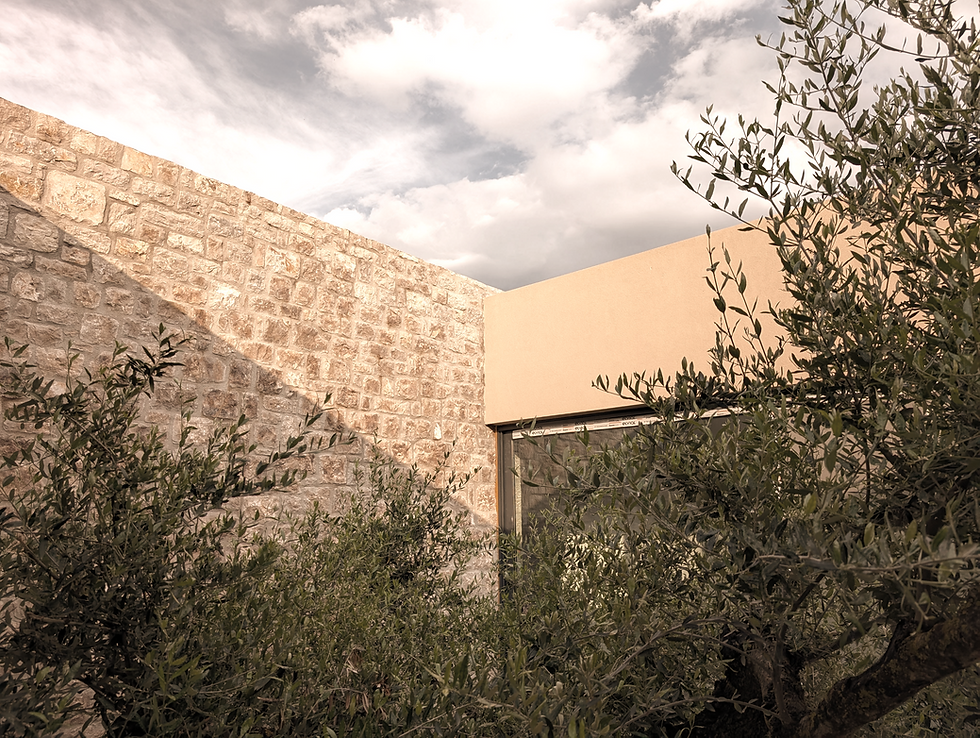
[inside the olive] - residential project near Kalamata, architecture by Space Dreams (under construction)
[inside the olive] 🫒🫒
Located in a seaside settlement near Kalamata, this residential project explores the subtle interplay between Mediterranean landscape, local construction traditions, and contemporary modes of living. The proposal is conceived not as an object placed on the land, but as a quiet intervention that reveals and frames the qualities of its surroundings. Through a careful orchestration of solid and void, light and shadow, the architecture establishes a dialogue with nature—one that prioritizes continuity, restraint, and spatial clarity.
The house is gently embedded within an existing olive grove, allowing the landscape to remain the dominant presence on the site. Rather than imposing a new order, the design follows the natural rhythm of the terrain and the irregular geometry of the trees. Mature olive trunks become spatial markers, defining views, casting shadows, and filtering light throughout the day. This approach reinforces a sense of coexistence, where architecture operates as a background to daily life within the landscape, rather than its foreground.
At the center of the composition lies an internal courtyard, organized around a preserved olive tree that becomes both a symbolic and spatial anchor. The courtyard is defined by thick stone walls—partly restored, partly reinterpreted—which establish a sense of enclosure while maintaining visual permeability. Acting as a microclimatic device, this space moderates temperature, protects from coastal winds, and creates a calm, introspective environment. It becomes the heart of the house: a place of gathering, pause, and seasonal transformation, around which all primary functions are arranged.
The spatial organization unfolds as a sequence of transitions between interior and exterior conditions. Living spaces open generously toward both the courtyard and the wider landscape, creating layered perspectives and cross-ventilation paths. Large sliding glass panels dissolve the physical boundaries of the house, allowing sea air, vegetation, and natural light to penetrate deep into the interior. This fluidity enhances the experiential continuity between inside and outside—an essential characteristic of Mediterranean coastal living.
Materiality is approached as an extension of the site itself. Locally sourced stone, textured plaster surfaces, and muted floor finishes echo the tones of earth, bark, and sun-bleached vegetation. The palette is intentionally restrained, allowing light and shadow to animate surfaces throughout the day. Construction details are kept precise yet unobtrusive, emphasizing craftsmanship and the tactile qualities of materials rather than formal expression.
Lighting design is treated as a subtle layer within the architectural composition. Concealed fixtures and low-intensity sources gently wash the stone walls and highlight material textures during the evening hours, creating a warm and atmospheric environment without disrupting the natural darkness of the landscape. The transition from daylight to artificial illumination is gradual, reinforcing the calm and introspective character of the house.
Programmatically, the house balances openness and privacy through a clear zoning strategy. Communal areas are oriented toward shared outdoor spaces, encouraging social interaction and visual connection to the landscape, while private rooms are positioned to ensure quietness, shade, and controlled views. Each space is carefully proportioned to maintain a sense of intimacy while remaining connected to the larger spatial narrative.
Ultimately, the project proposes a contemporary interpretation of residential architecture in the Peloponnese—one that draws from vernacular principles without replicating them. Climate responsiveness, material authenticity, and spatial simplicity are combined to create a living environment that is both grounded and refined. Designed to age gracefully over time, the house embraces a timeless architectural language rooted in place, light, and the enduring presence of the olive landscape.


more projects